






1. Monitoring Background
The safe flood control of reservoirs has always been a difficult and key point in China's flood prevention and control. The safe flood control of small and medium-sized reservoirs has become a weak link in the current national flood control work. Most reservoirs lack necessary safety monitoring facilities, outdated inspection methods, and significant hidden dangers. Once a local rainstorm flood occurs, it is very easy to cause dam break events, ranging from property losses to heavy casualties or devastating disasters. According to the latest data, as of the end of 2024, there are 95000 reservoir dams in China. In addition, as of March 8, 2025, 94877 reservoirs of various types have been built nationwide.
Since the 14th Five Year Plan, China has achieved certain results in ensuring the safety of reservoirs during floods. The Ministry of Water Resources has guided the construction of more than 51000 small reservoir dam safety monitoring facilities and more than 57000 rain water regime monitoring and reporting facilities, and used additional treasury bond funds to support the construction of 425 large and medium-sized reservoir safety monitoring facilities. At the same time, all 3570 large and medium-sized reservoirs that undertake flood control tasks have completed the capacity curve review. In 2024, the Ministry of Water Resources and the National Development and Reform Commission jointly issued the "Implementation Plan for Risk Removal and Reinforcement of Dangerous Reservoirs in China (2025-2027)", which plans to implement risk removal and reinforcement of more than 200 large and medium-sized reservoirs and more than 4800 small reservoirs within three years.
II. System Overview
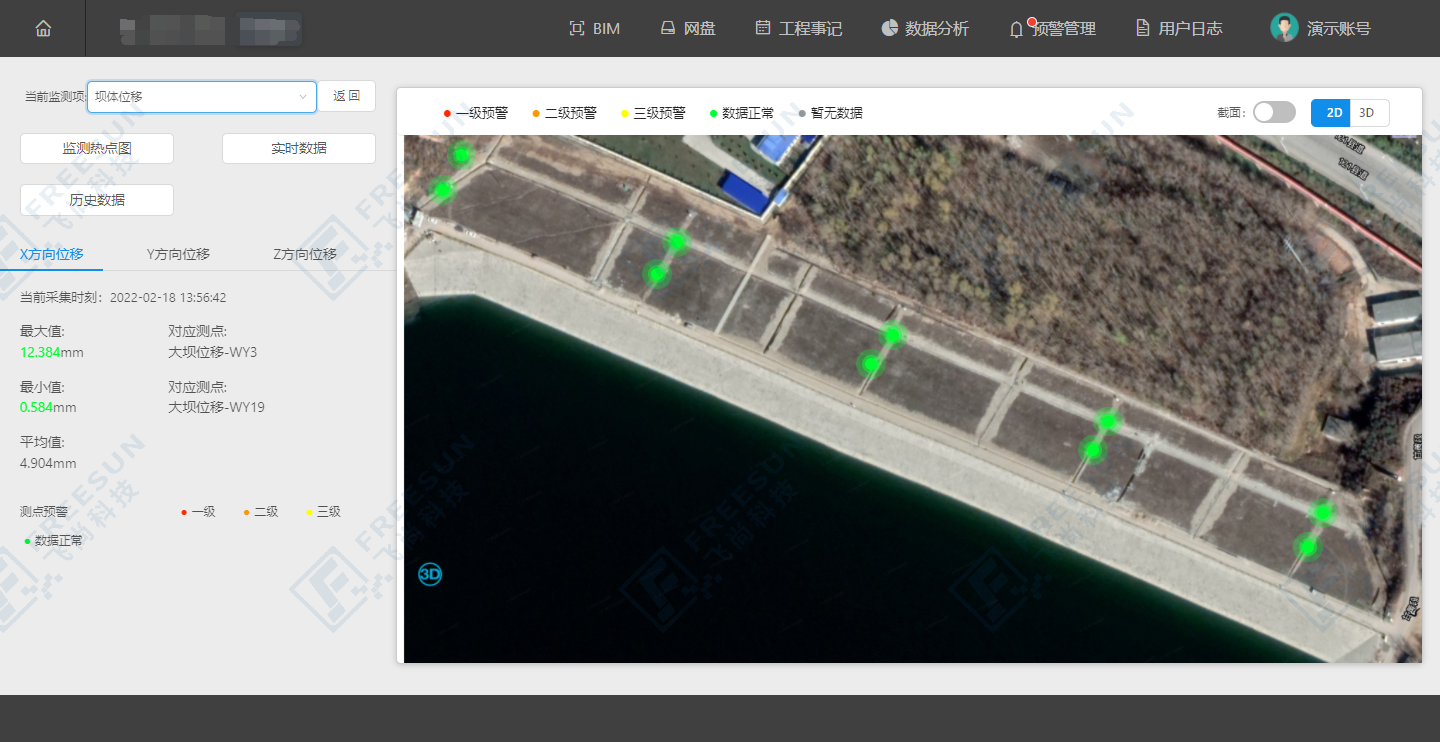
To achieve the goal of building "digital water conservancy" in China, freesun Technology has taken the lead in closely integrating cloud computing with the Internet of Things, establishing an intelligent, automated, and information-based online monitoring system for reservoir dam safety. It has functions such as remote data transmission, real-time online monitoring and early warning, and plays a crucial role in ensuring the safe operation of reservoir dams.
III. Main Monitoring Contents
1. Surface displacement monitoring
2. Internal displacement monitoring
3. Groundwater level monitoring
4. Rainfall monitoring
5. Monitoring of retaining wall pressure
6. Concrete stress monitoring
7. Seepage monitoring
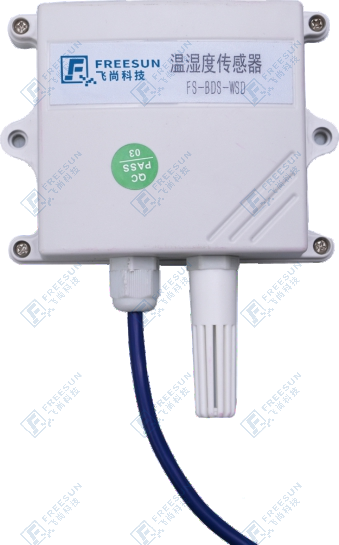
8. Temperature and humidity monitoring
IV. List of Monitoring Projects
| Monitoring item | Device name |
| Surface displacement | GNSS | Internal displacement | Serial fixed inclinometer |
| Groundwater level | Pore water pressure gauge |
| Rainfall | Rain gauge |
| Retaining wall pressure | Soil pressure gauge |
| Concrete stress | Strain gauge |
| Infiltration rate | Water measuring weir meter |
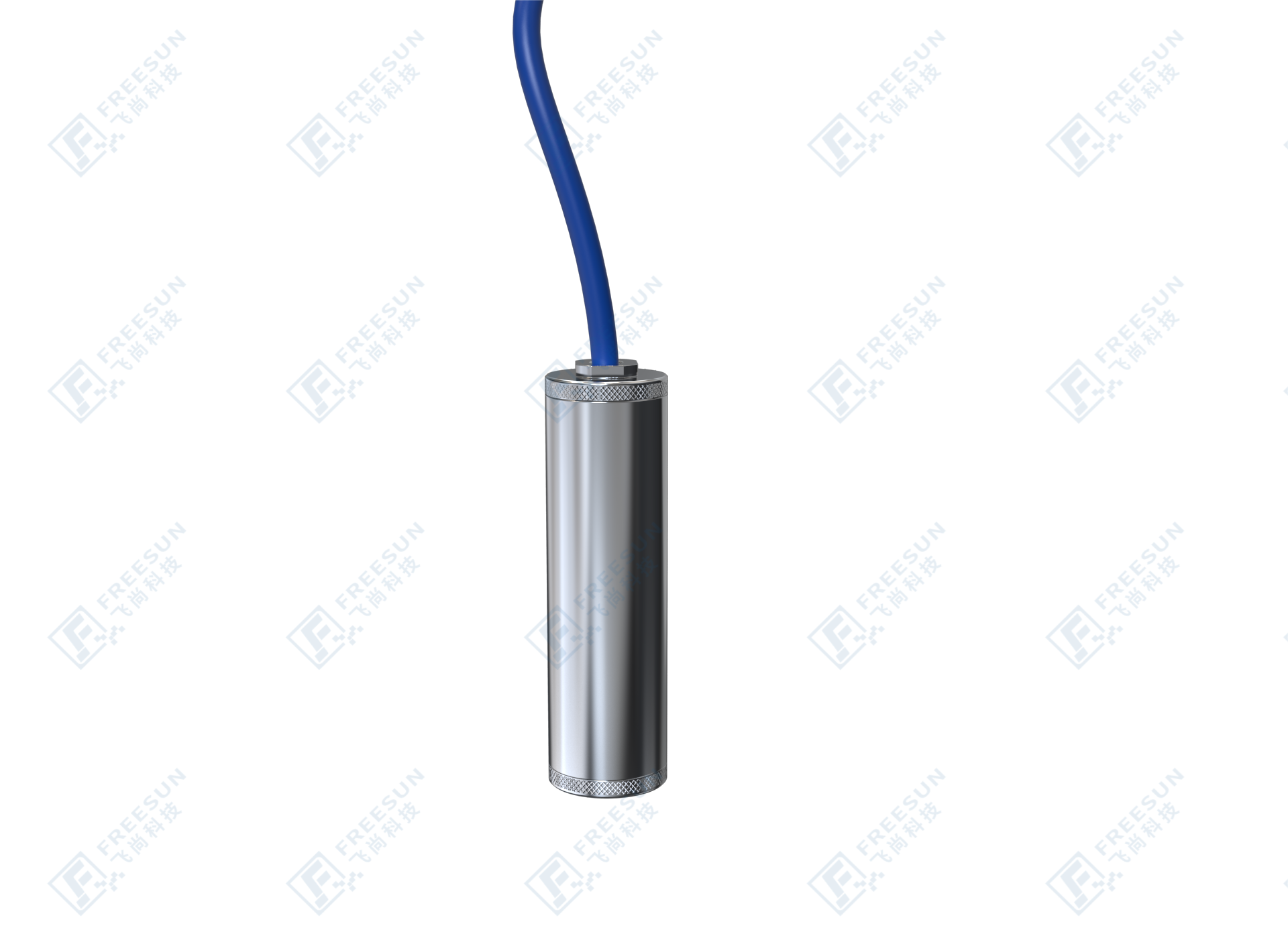
| Temperature and humidity | Temperature and humidity meter |
| Seepage pressure | Pore water pressure gauge |
Fifth, Monitoring Basis
(1) Technical Specification for Safety Monitoring of Earth Rock Dams (SL551-2012);
(2) Technical Specification for Safety Monitoring of Earth Rock Dams (DL/T 5259-2010);
(3) Code for Compilation of Safety Monitoring Data of Earth Rock Dams (DL/T 5256-2010);
(4) Technical Specification for Automation of Dam Safety Monitoring (DL/T5211-2019);
(5) Basic Technical Conditions for Equipment of Dam Safety Automatic Monitoring System (SL268-2001);
(6) Technical Specification for Safety Monitoring of Concrete Dams (SL601-2013);
(7) Technical Specification for Safety Monitoring of Concrete Dams (DL/T5178-2016);
(8) Concrete Dam Safety MonitoringData Compilation Regulations "(DL/T5209-2020);
(9) Design Specification for Stone Masonry Dams (SL25-2006);
(10) Standard for Water Level Observation (GB/T50138-2010);
(11) Specification for Construction Surveying of Water Resources and Hydropower Engineering (SL 52-2015);
(12) Specification for Surveying of Water Resources and Hydropower Engineering (Sl197-2013);
(13) Technical Specification for Cement Grouting Construction of Hydraulic Structures (DL/T 5148-2021);
(14) Technical Specification for Cement Grouting Construction of Hydraulic Structures (SL 62-2020);
(15) Code for Construction and Acceptance of Low Voltage Electrical Equipment Installation Engineering (GB 50254-2014).
Sixth, Implement Functions
1. Data can be displayed in graphical form, including water level flow relationship, water level process line, rainfall bar chart, seepage pressure and seepage process line, time history curve chart, simulation chart, histogram, bar chart, and other forms.
2. It can be monitored in real-time 24/7 under various climatic conditions.
Once the monitoring data exceeds the preset value, timely warning can be given and relevant units should be notified to take corresponding measures immediately.