






Hunan Xinxu Gaodun
更新时间: 2026年6月3日 点击次数:15096
Hunan Xinxu Gaodun
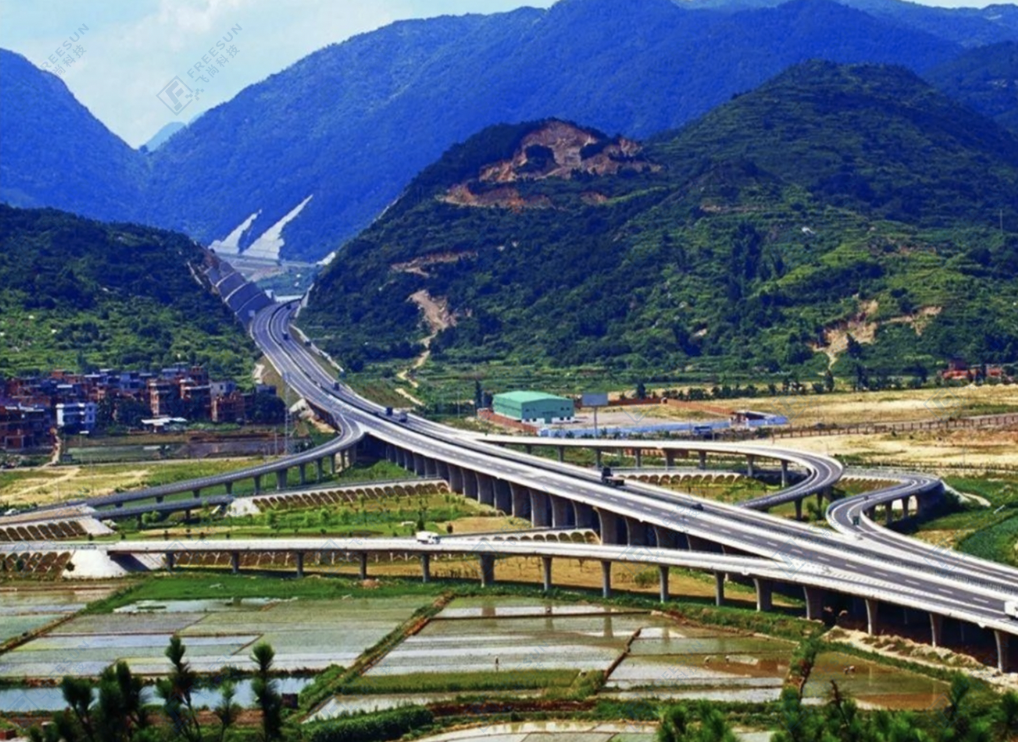
The Xinxu Gaodun project is one of the Two Rivers Extra Large Bridge projects. It is a continuous concrete steel structure bridge located in Shuangjiang Village, Liangjiang Township, Xupu County, on the Xinxu Expressway. The bridge is not designed to span the Shanxi River and its valley. Belonging to the subtropical humid and hot climate zone, with abundant rainfall and an average relative humidity of 78% -80%. The upper structure of the bridge adopts a segmented design, with each main bridge measuring 90+2× A prestressed concrete continuous rigid frame bridge with four spans and one connection of 170+90 meters, with hollow piers as the main piers, and a total length of 520 meters for the main bridge. The main piers are double thin-wall piers and hollow thin-wall piers, and the foundations are pile caps and group pile foundations.
one Make the main beam flat and smooth in longitudinal alignment, and ensure that the longitudinal alignment of the main beam after closure meets the design and specification requirements;
two Control the elevation and verticality of the bridge piers to ensure that the bridge pier alignment is vertical at the designed closure temperature after the main bridge is completed;
three Analyze the causes and consequences of various deviations to ensure that the load effects (i.e. internal forces and stresses of beams and piers) of each stage of the construction process and the structure after completion meet the specifications and design requirements.
1. Observation of Bridge Pier Deformation and Settlement
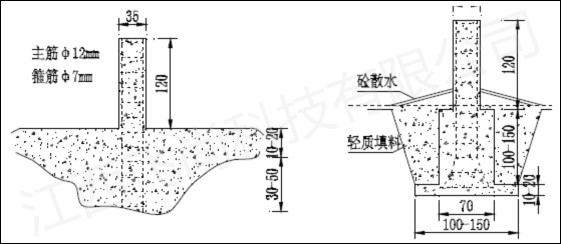
The deformation and settlement observation of bridge piers are both carried out using the method of“ Code for Measurement of Building Deformation; The second level deformation measurement accuracy index in JTJ/T 8-97 is that the mean square error of the height difference between observation points and stations in settlement observation should not exceed 0.5mm This bridge is equipped with three or more benchmark points, evenly distributed in soil stable areas outside the influence range of bridge pressure. The distance between the benchmark points and the bridge is not less than 50m, and they are buried in bedrock or soil layers, as shown in the figure.
2. Bridge pier settlement monitoring
The deflection test of the upper structure is based on the measuring point at the center of the top plate of the pier top box girder section 0 as the relative reference point, but in reality, there is settlement of the upper structure due to foundation settlement. Therefore, it is necessary to monitor the settlement of the bridge piers to achieve the goal of correctly controlling the deflection of the upper structure.
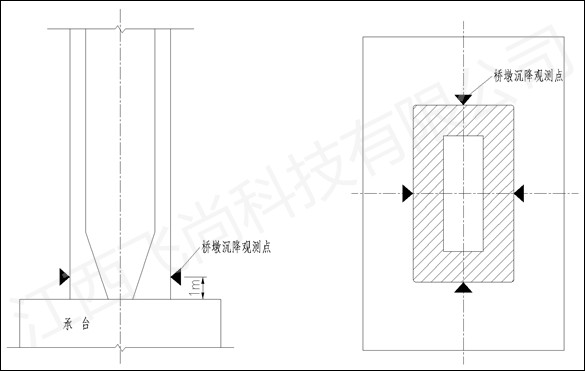
The settlement measurement points for bridge piers are arranged at a distance of 1m above the pier base, with 4 settlement observation points arranged for each bridge pier, as shown in the figure.
 Layout of Bridge Pier Settlement Measurement PointsImage
3. During the segmented construction of bridge piers, monitor the formwork coordinates of each section to control the verticality of the piers.
After the completion of the bridge pier construction, prisms are arranged on the pier wall at the top of the bridge pier to monitor the deformation of the bridge pier during and after the construction of the box girder, and compare it with the structural analysis results.
4. Stress (strain) monitoring
The stress (strain) monitoring of bridge piers adopts concrete embedded strain gauges tied to the main beams and main reinforcements inside the bridge piers. The section for testing the normal stress of the box girder is located on both sides of the pier at the root of the main beam and in the middle of the bridge span. The section at the root of the main beam is located at the end of the thickness change of the top plate, bottom plate, and web plate of the box girder.
5. Temperature monitoring
The influence of temperature on the deflection of continuous rigid frame box girders and the deformation of bridge piers after beam span closure is significant. Due to temperature changes, the cantilever box beam will undergo significant deflection deformation, which directly affects the accuracy of the formwork elevation. Therefore, monitoring and analysis of temperature effects should be given sufficient attention.
Summary of the number of sensors used for high pier monitoring 
By monitoring, collecting data, and optimizing control during the construction process, based on the indicators of the existing beam segments, predict the indicators of future beam segments, avoid construction errors, shorten the construction period, and save investment.


Objectives of Construction Monitoring and Measurement
The control objectives of the construction monitoring and measurement of Xinxu Gaodun mainly include:one Make the main beam flat and smooth in longitudinal alignment, and ensure that the longitudinal alignment of the main beam after closure meets the design and specification requirements;
two Control the elevation and verticality of the bridge piers to ensure that the bridge pier alignment is vertical at the designed closure temperature after the main bridge is completed;
three Analyze the causes and consequences of various deviations to ensure that the load effects (i.e. internal forces and stresses of beams and piers) of each stage of the construction process and the structure after completion meet the specifications and design requirements.
Monitoring Projects
1. Observation of Bridge Pier Deformation and Settlement
The deformation and settlement observation of bridge piers are both carried out using the method of“ Code for Measurement of Building Deformation; The second level deformation measurement accuracy index in JTJ/T 8-97 is that the mean square error of the height difference between observation points and stations in settlement observation should not exceed 0.5mm This bridge is equipped with three or more benchmark points, evenly distributed in soil stable areas outside the influence range of bridge pressure. The distance between the benchmark points and the bridge is not less than 50m, and they are buried in bedrock or soil layers, as shown in the figure.
2. Bridge pier settlement monitoring
The deflection test of the upper structure is based on the measuring point at the center of the top plate of the pier top box girder section 0 as the relative reference point, but in reality, there is settlement of the upper structure due to foundation settlement. Therefore, it is necessary to monitor the settlement of the bridge piers to achieve the goal of correctly controlling the deflection of the upper structure.
The settlement measurement points for bridge piers are arranged at a distance of 1m above the pier base, with 4 settlement observation points arranged for each bridge pier, as shown in the figure.
3. During the segmented construction of bridge piers, monitor the formwork coordinates of each section to control the verticality of the piers.
After the completion of the bridge pier construction, prisms are arranged on the pier wall at the top of the bridge pier to monitor the deformation of the bridge pier during and after the construction of the box girder, and compare it with the structural analysis results.
4. Stress (strain) monitoring
The stress (strain) monitoring of bridge piers adopts concrete embedded strain gauges tied to the main beams and main reinforcements inside the bridge piers. The section for testing the normal stress of the box girder is located on both sides of the pier at the root of the main beam and in the middle of the bridge span. The section at the root of the main beam is located at the end of the thickness change of the top plate, bottom plate, and web plate of the box girder.
5. Temperature monitoring
The influence of temperature on the deflection of continuous rigid frame box girders and the deformation of bridge piers after beam span closure is significant. Due to temperature changes, the cantilever box beam will undergo significant deflection deformation, which directly affects the accuracy of the formwork elevation. Therefore, monitoring and analysis of temperature effects should be given sufficient attention.
Summary of the number of sensors used for high pier monitoring
Achieving Results
The main bridge of this bridge is a large-span prestressed concrete continuous rigid frame structure with high bridge piers. Its design and construction are closely related, and many factors such as the construction method, material properties, pouring procedures, environmental temperature field, formwork elevation, etc. directly affect the verticality of the bridge piers and the shape and stress of the box girder. There are objective differences between the actual construction parameters and the ideal values of the design parameters. Therefore, detailed analysis and experimental verification must be carried out for each construction stage. Necessary data should be collected at the construction site, and theoretical values should be corrected and calculated through parameter identification. Finally, the formwork elevation and main pier elevation, verticality, structural stress, etc. of the poured box girder should be adjusted and controlled appropriately to guide construction practice and ensure the design. The accurate implementation of the construction process or the adjusted construction process, Meet the design requirements.By monitoring, collecting data, and optimizing control during the construction process, based on the indicators of the existing beam segments, predict the indicators of future beam segments, avoid construction errors, shorten the construction period, and save investment.
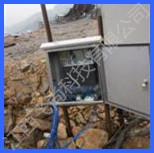
On site pictures