




Honggutan New District Jiulong Hubei Station
更新时间: 2026年5月28日 点击次数:12834
Honggutan New District Jiulong Hubei Station
Project Overview
Jiulong Hubei Station is an underground side platform station with an effective platform center mileage of DK17+360.949. The starting mileage of the station is DK17+273.049, and the ending mileage is DK17+449.049. The length is 176m, and the width of the main structure of the standard section is 77.9m. According to the planned elevation, the burial depth of the bottom plate at the effective platform center mileage is about 11.411. The left and right lines at both ends of the station are connected to open cut foundation pits. The station is equipped with 4 main entrances and 2 sets of wind pavilions. Both sides of the station are connected to open cut sections.
Monitoring Content
In order to timely collect, feedback, and analyze deformation information of the surrounding environment and enclosure structure during construction, achieve information-based construction, and ensure construction safety; Based on the environmental conditions of the construction site and the depth of excavation, the monitoring items for station foundation pit construction include slope top displacement, ground settlement, groundwater level, and deformation of surrounding buildings (structures). Please refer to the table below for details: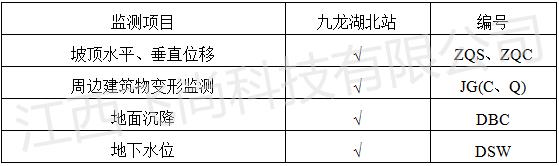
Key risk analysis and response measures;
Based on the geological conditions, environmental conditions, and engineering design of this project, further analysis and summary of key risk factors for this project are presented in the Key Factor Analysis Table and Safety Monitoring Key Table:
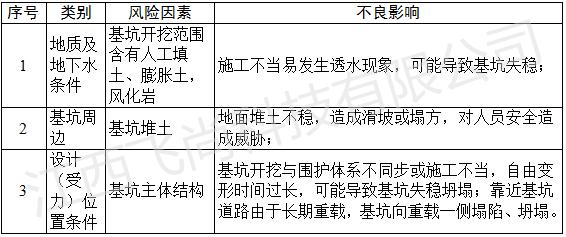
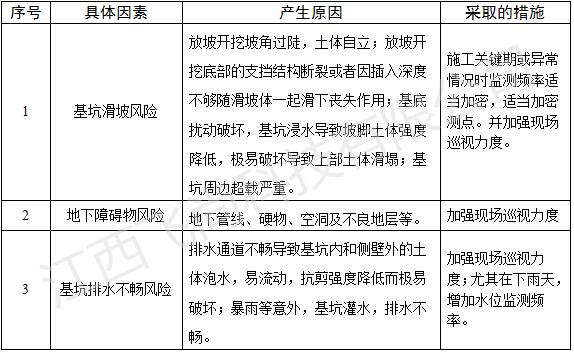
Based on the analysis of the key risk factors in this project, the monitoring risks and difficulties of the foundation pit on this site mainly include: one Layout of measuring points; Due to the early excavation, the ground was uneven and some loose soil was piled up on both sides of the slope. Some of the damaged areas were also difficult to set up as ground subsidence points in the rock layers.
two Measurement point protection; The site is quite chaotic, with frequent traffic of construction vehicles and equipment, which can easily damage the already established measuring points.
three On site measurement; There is a lot of loose soil piled up on site, and there is a certain height difference in the terrain. The ground is uneven, especially on rainy days, making on-site measurements inconvenient.
System Implementation Function
one Automated monitoring:24-hour real-time monitoring, no need for personnel to enter the construction site multiple times.
two Information management: Implement information management of test data, and relevant personnel can log in to Ethernet with different permissions or use their mobile phones to obtain on-site structural safety data and safety assessment information.
three Report push: Real time display and release of monitoring results, and regularly push monitoring reports to users.
four Multi level warning: When there is abnormal information in the structure, the system automatically issues a warning and promptly conveys the information to relevant management personnel through SMS, and prompts the backend to conduct a safety assessment of the current status of the structure in a timely manner.
five Structural trend analysis: By comparing rich load effect data and calculation results, the actual state change and development trend of the structure can be obtained, and the safety status of the structure can be understood.
six Multiple terminal query methods: Supports different terminal query methods such as mobile phones, iPads, PCs, etc., truly achieving strategic planning and controlling thousands of miles.
Jiulong Hubei Station is an underground side platform station with an effective platform center mileage of DK17+360.949. The starting mileage of the station is DK17+273.049, and the ending mileage is DK17+449.049. The length is 176m, and the width of the main structure of the standard section is 77.9m. According to the planned elevation, the burial depth of the bottom plate at the effective platform center mileage is about 11.411. The left and right lines at both ends of the station are connected to open cut foundation pits. The station is equipped with 4 main entrances and 2 sets of wind pavilions. Both sides of the station are connected to open cut sections.
Monitoring Content
In order to timely collect, feedback, and analyze deformation information of the surrounding environment and enclosure structure during construction, achieve information-based construction, and ensure construction safety; Based on the environmental conditions of the construction site and the depth of excavation, the monitoring items for station foundation pit construction include slope top displacement, ground settlement, groundwater level, and deformation of surrounding buildings (structures). Please refer to the table below for details:
Statistical Table of Station Foundation Pit Monitoring Projects
Key risk analysis and response measures;
Based on the geological conditions, environmental conditions, and engineering design of this project, further analysis and summary of key risk factors for this project are presented in the Key Factor Analysis Table and Safety Monitoring Key Table:
Key Factor Analysis Table
Key Safety Monitoring Points Table;
Based on the analysis of the key risk factors in this project, the monitoring risks and difficulties of the foundation pit on this site mainly include: one Layout of measuring points; Due to the early excavation, the ground was uneven and some loose soil was piled up on both sides of the slope. Some of the damaged areas were also difficult to set up as ground subsidence points in the rock layers.
two Measurement point protection; The site is quite chaotic, with frequent traffic of construction vehicles and equipment, which can easily damage the already established measuring points.
three On site measurement; There is a lot of loose soil piled up on site, and there is a certain height difference in the terrain. The ground is uneven, especially on rainy days, making on-site measurements inconvenient.
System Implementation Function
one Automated monitoring:24-hour real-time monitoring, no need for personnel to enter the construction site multiple times.
two Information management: Implement information management of test data, and relevant personnel can log in to Ethernet with different permissions or use their mobile phones to obtain on-site structural safety data and safety assessment information.
three Report push: Real time display and release of monitoring results, and regularly push monitoring reports to users.
four Multi level warning: When there is abnormal information in the structure, the system automatically issues a warning and promptly conveys the information to relevant management personnel through SMS, and prompts the backend to conduct a safety assessment of the current status of the structure in a timely manner.
five Structural trend analysis: By comparing rich load effect data and calculation results, the actual state change and development trend of the structure can be obtained, and the safety status of the structure can be understood.
six Multiple terminal query methods: Supports different terminal query methods such as mobile phones, iPads, PCs, etc., truly achieving strategic planning and controlling thousands of miles.