






1. Project Overview
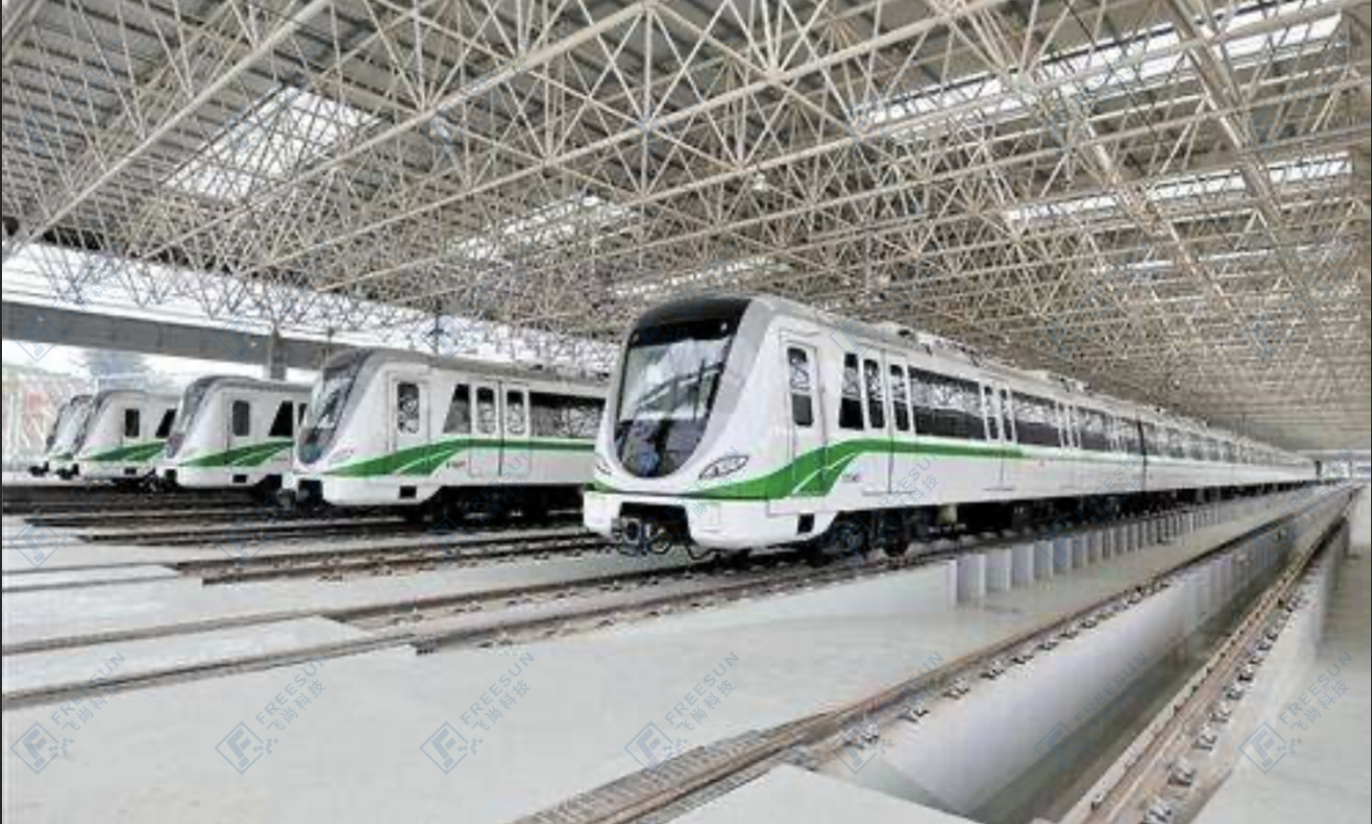
The starting point of Nanchang Metro Line 3 project is Yinsanjiao North Station, and the ending point is Jingdong Avenue Station. The total length of the line is about 28.5km, all of which are laid underground, with a total of 22 stations; The average distance between stations is 1.34km, with a maximum distance of 2235m, between Lishan Road Station and Zhenxing Avenue Station; The minimum distance between stations is 612.29m, which is between Cross Street Station and Shengjinta Station. The Nanchang Metro Line 3 project includes one Liantang Vehicle Depot and one High tech Parking Lot. The Liantang Vehicle Depot is located in the southeast corner of the Silver Triangle Overpass, east of Xiangtang North Avenue, and west of the Beijing Kowloon Railway, covering an area of approximately 21 hectares. The Gaoxin Parking Lot is located on the east side of Gaoxin Avenue, west side of Gaoxin Fifth Road, north side of Huoju Third Road, and south side of Dongyuan Road, with an area of approximately 12 hectares.
The main direction of Line 3 is: Yingbin Avenue → Jingshan North Road → Cross Street → Qianjin Road → Xiangshan South Road → Xiangshan North Road → Dieshan Road → Qingshan South Road → Erqi North Road → Passing through Qingshan Lake → Guowei Road → Huoju Street.
- Project Design and Implementation
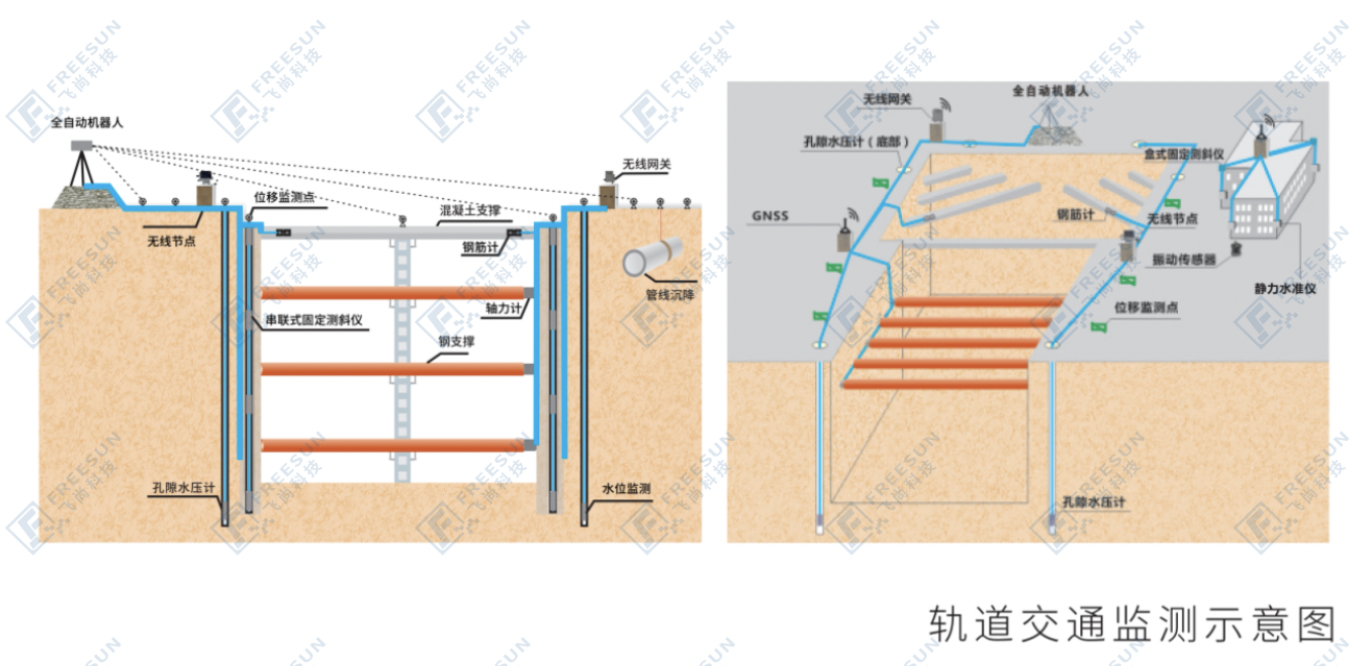
Nanchang Metro Line 3PartialMonitoring Project List
Serial number | Monitoring project | Monitoring content |
1 | Horizontal displacement at the top of the support pile | Monitoring of stress and deformation of supporting structures |
2 | Vertical displacement at the top of the support pile | Monitoring of stress and deformation of supporting structures |
3 | Horizontal displacement of supporting pile body | Monitoring of stress and deformation of supporting structures |
4 | Supporting axial force | Monitoring of changes in supporting axial force |
5 | Vertical displacement of the earth's surface | |
6 | Groundwater level | Monitoring of groundwater level changes |
7 | Vertical displacement of buildings (structures) | |
10 | Vertical displacement of underground pipelines | Monitoring vertical displacement of underground pipelines |
ThreeImplement Functions
(1) Understand the deformation of the enclosure structure and surrounding strata, provide information for daily construction management, and ensure construction safety. The deformation and stress state of the enclosure structure and surrounding soil are closely related to its stability. Before various forms of damage occur to the enclosure structure and surrounding soil, there are usually large displacements, deformations, abnormal stress, etc. Monitoring data and results are important basis for on-site construction management and technical personnel to judge whether the project is safe. Therefore, during the construction process, the correctness of the construction plan is usually verified based on observation results, construction parameters are adjusted, and auxiliary engineering measures are taken when necessary to achieve the goal of information-based construction
(2) Modify engineering design: Timely feedback the on-site monitoring data and information to modify and improve the design, so as to achieve high-quality, safe, and economically reasonable design.
(3) Based on monitoring data, analyze the surface uplift and subsidence caused by construction, as well as the impact of geological stress distribution and deformation on adjacent buildings and municipal infrastructure; Take corresponding reinforcement and preventive measures to ensure the safety of adjacent buildings (structures) and municipal infrastructure; Analyze monitoring data on the impact of drilling and grouting piles and crown beams during construction to ensure the safety of foundation pit construction.
(4) Verify the design of the support structure and provide feedback information for the revision of the support structure design and construction plan.
(5) Accumulate data to improve the design and construction level of underground engineering. The distribution of soil pressure in support structures is influenced by the support method, support structure stiffness, construction process, and the type of soil being supported, and is directly related to the displacement of the support structure and soil. It is often complex and the current design analysis theory has not yet reached a mature stage. Accumulating complete and accurate underground engineering excavation and support monitoring results is valuable for summarizing engineering experience and improving design analysis theory.